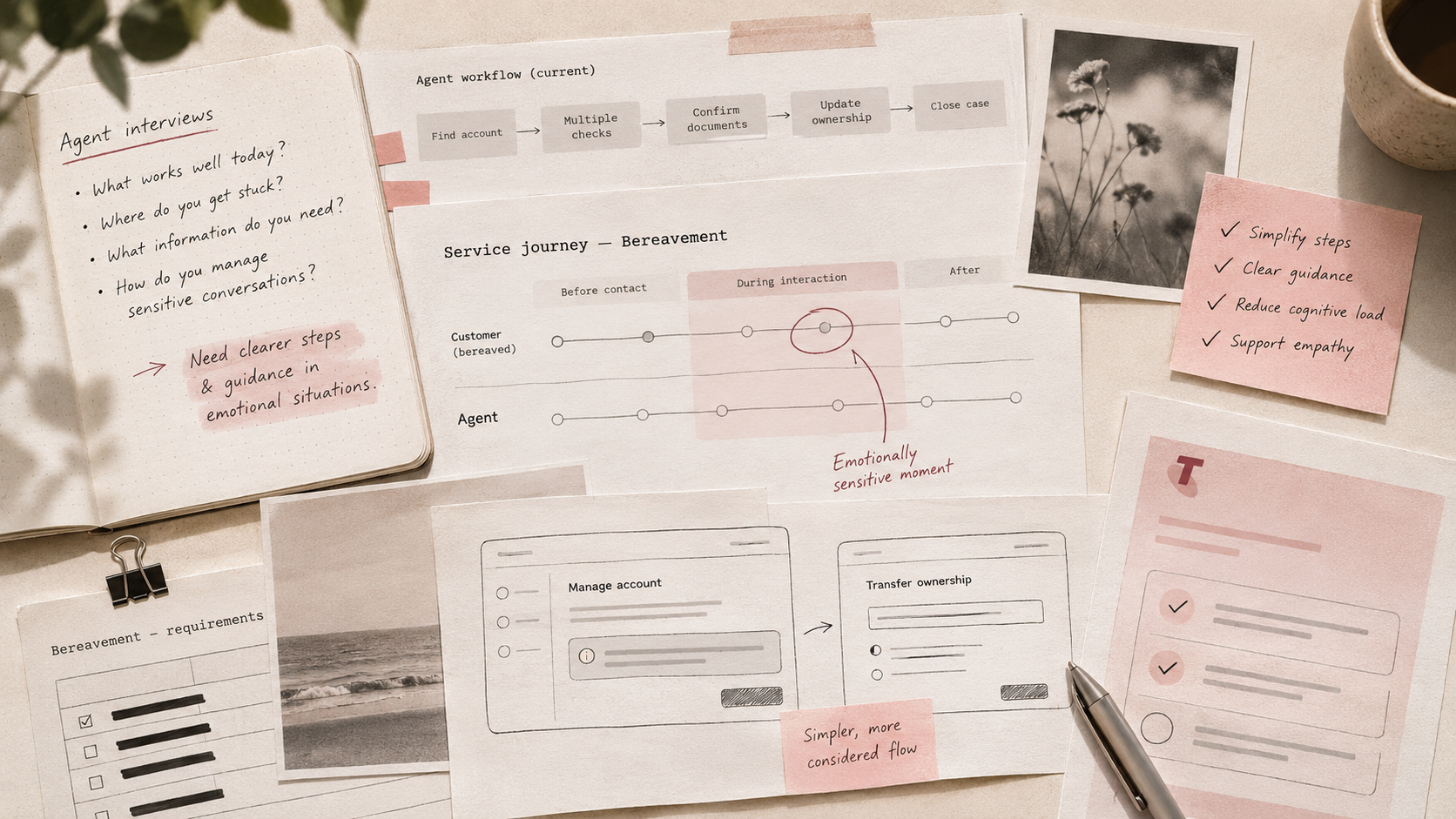
The problem: Managing a telecommunications account following the death of a loved one can be an emotionally difficult experience. Customers may be grieving while also navigating unfamiliar administrative processes, account ownership requirements and potentially complex decisions.
For customer service agents, supporting these customers required balancing sensitivity and empathy with business processes, compliance requirements and technical limitations.
The challenge was to create a more intuitive and compassionate workflow that helped agents manage bereavement-related account changes while minimising unnecessary stress for customers.
Project background
At Telstra, I worked as a Senior UX Designer and Researcher on the Salesforce-based Console platform used by customer service agents.
One of the initiatives I contributed to focused on improving the bereavement process, particularly the steps involved in managing accounts and transferring ownership following a customer's death.
The objective was to simplify the agent experience while recognising the emotional circumstances of the customers they were supporting.
-
Simplify the bereavement-related account management process.
Help agents navigate complex requirements with greater confidence.
Reduce unnecessary steps and friction for grieving customers.
Support more empathetic and consistent customer interactions.
Balance customer needs with operational and technical constraints.
-
Senior UX Design, User Research, Workflow Design and Stakeholder Collaboration
Understanding the problem
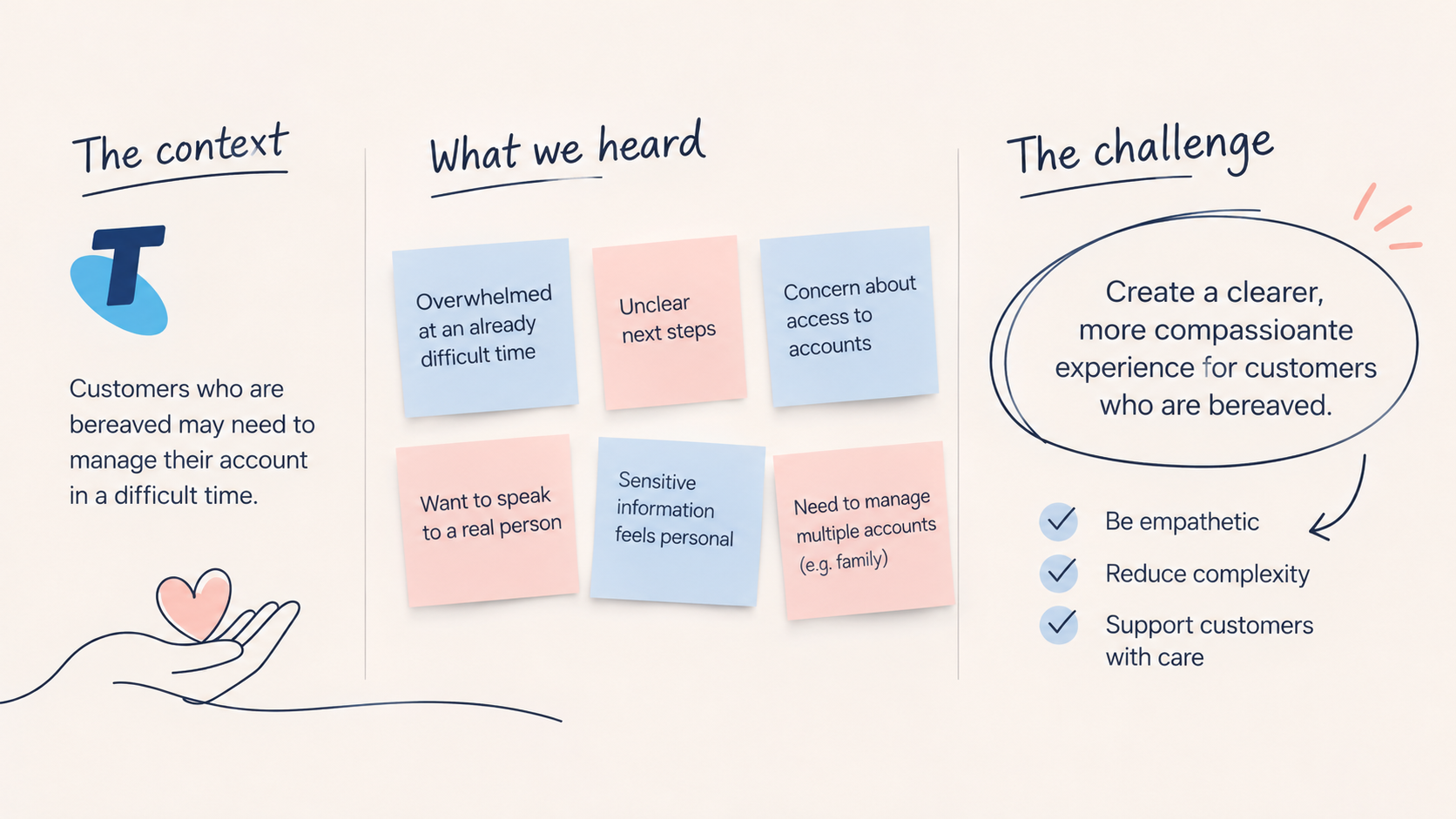
I began by exploring the existing workflows and identifying areas where agents encountered difficulties.
This involved speaking with customer service agents to understand their experiences, the challenges they faced and the information they needed when assisting customers through bereavement-related enquiries.
I also participated in stakeholder discussions to understand the business requirements, operational dependencies and technical limitations associated with changing account ownership.
A key consideration was that the experience needed to support two distinct groups: the agent completing the task and the customer experiencing a potentially distressing life event.
The research helped identify opportunities to make the process clearer, more manageable and more considerate of the customer's circumstances.
Mapping workflows and exploring solutions
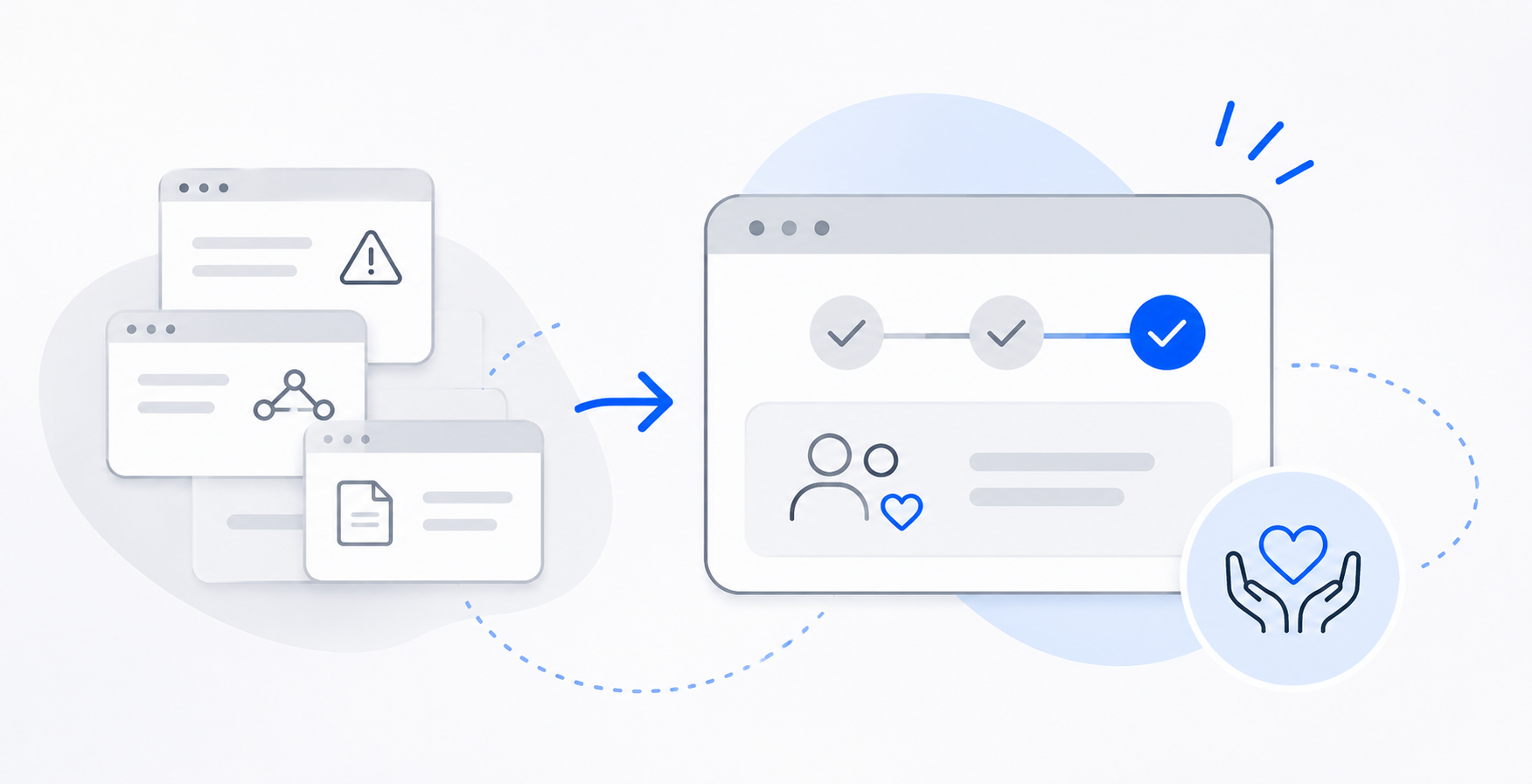
Using Miro, I explored the existing process and mapped potential improvements to the agent journey.
The workflow needed to account for different scenarios, business rules and technical dependencies while remaining easy for agents to understand and follow.
I worked with stakeholders and business analysts to clarify requirements, understand system constraints and explore how the process could be simplified.
The aim was to reduce unnecessary complexity without overlooking the operational requirements that needed to be met.
Designing with empathy
An important consideration throughout the design process was the emotional context of the interaction.
Unlike routine account management tasks, bereavement enquiries involve customers who may be distressed, overwhelmed or unfamiliar with the information being requested.
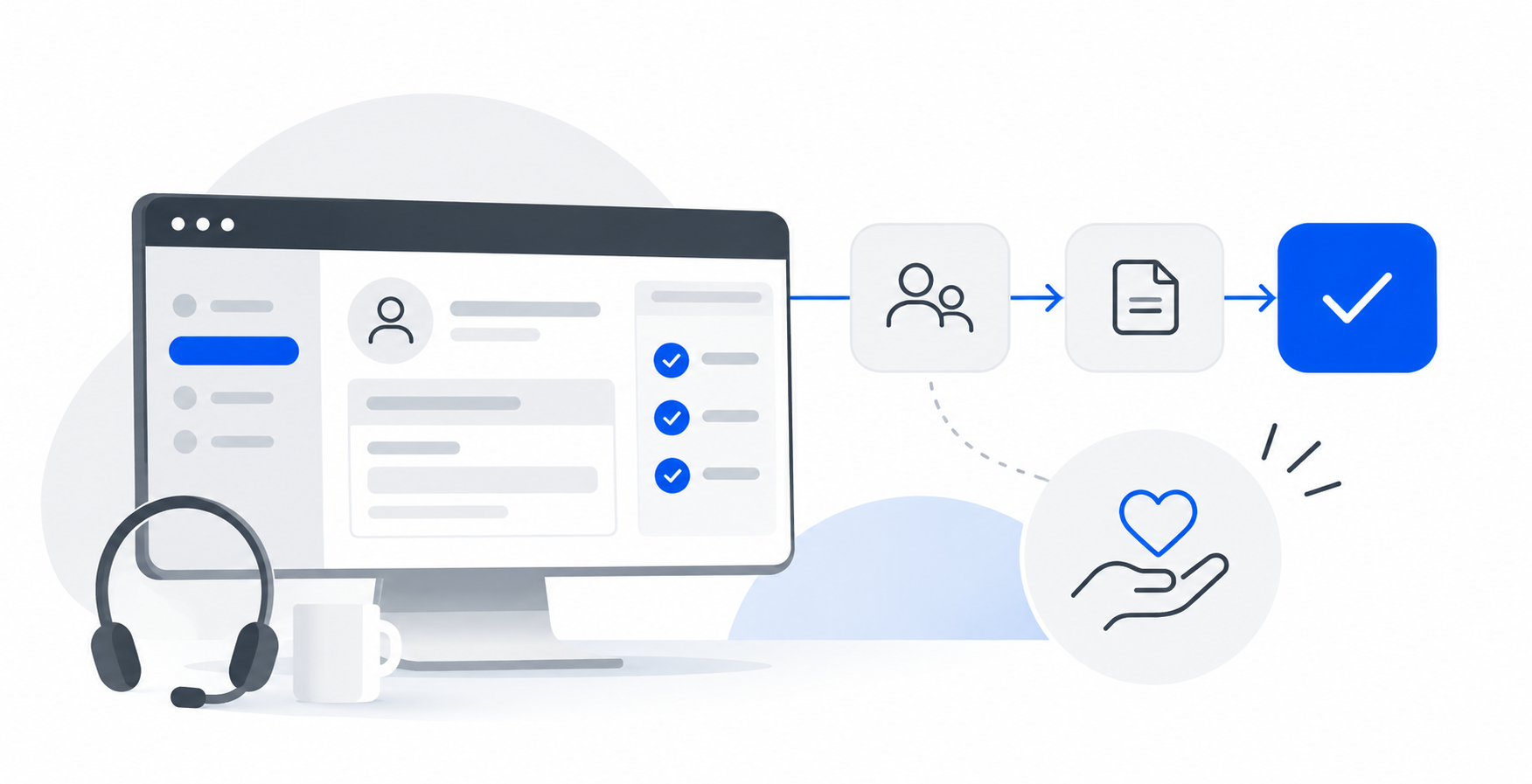
I considered how the workflow could better support agents in these situations by presenting relevant information clearly, guiding them through necessary steps and reducing avoidable friction.
The design approach focused on making the experience easier for agents to navigate so they could devote more attention to supporting the customer.
Developing the solution

I translated the research findings and workflow requirements into proposed improvements within the Salesforce Console experience.
The design work focused on clearer task progression, more intuitive organisation of information and a more structured approach to managing account ownership changes.
Throughout the process, I collaborated with stakeholders, business analysts and developers to explore feasible solutions and work within the platform's technical constraints.
Outcome
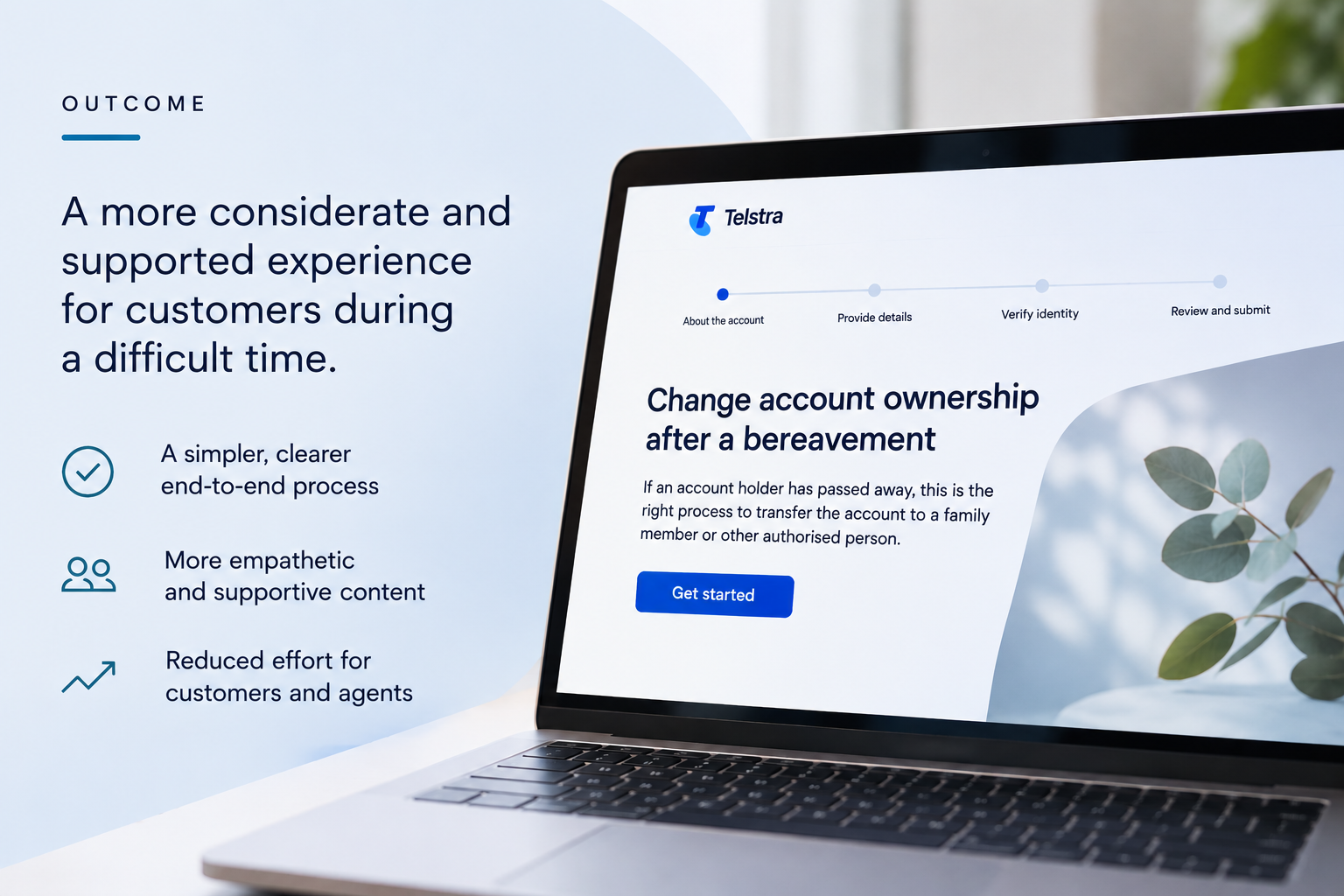
The project established a more considered design approach to bereavement-related account management, balancing operational requirements with the needs of customers experiencing a difficult life event.
By bringing together agent research, stakeholder input and workflow design, I contributed to an experience intended to reduce complexity, support agents and make an emotionally sensitive process easier to navigate.
The project reinforced the importance of designing beyond the immediate interface and considering the human circumstances surrounding each interaction.
Confidentiality note: The visuals presented in this case study are AI-generated illustrations created to represent the design concepts and processes discussed. They are not actual Telstra interfaces or internal documents. These illustrative visuals have been used to protect Telstra's confidential information and intellectual property.