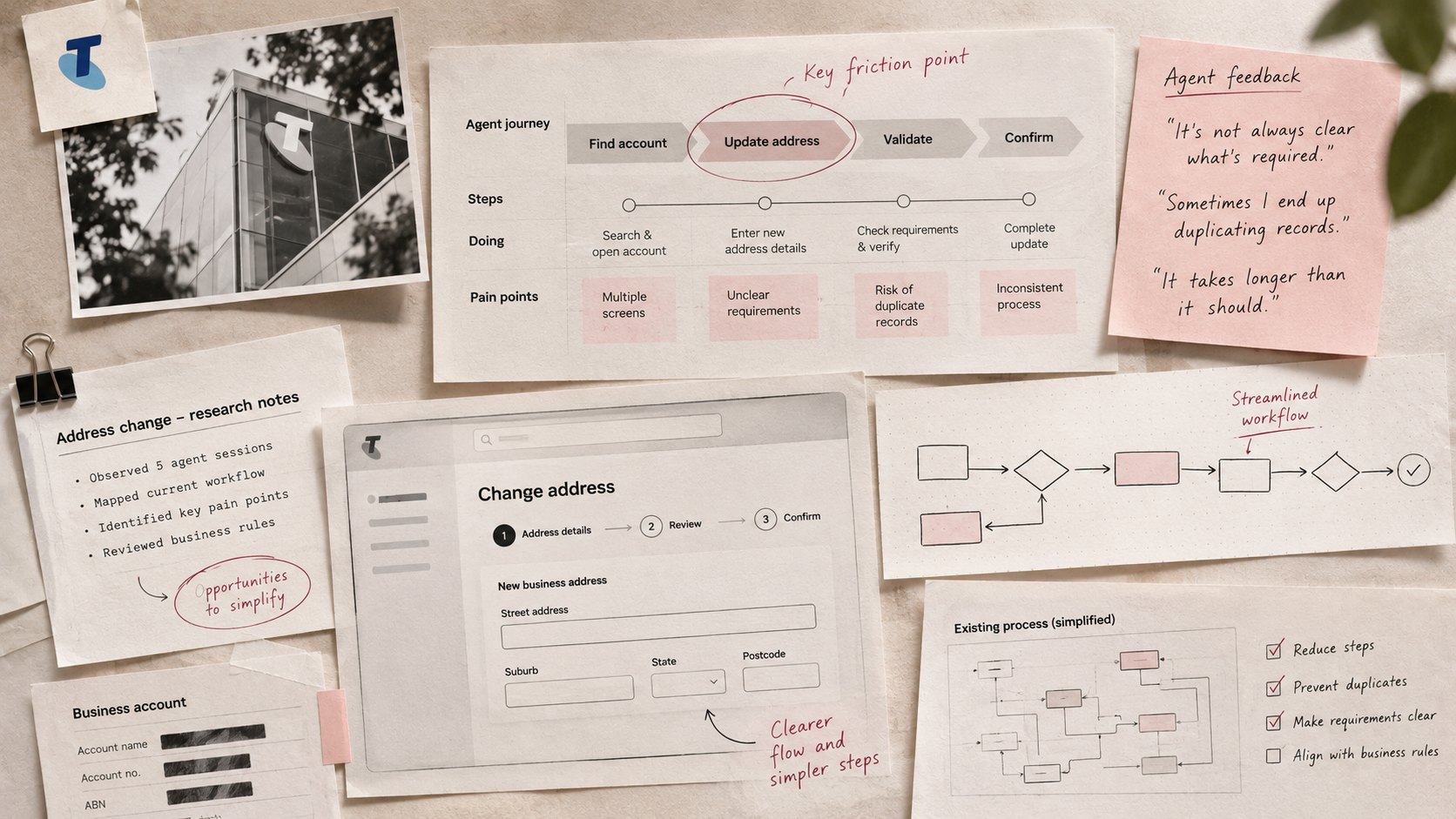
The problem: Changing a business customer's address should be a straightforward process. However, the existing workflows were difficult for customer service agents to follow and could result in errors, duplicated information and unnecessary complexity.
Agents needed to navigate multiple steps and requirements, increasing the likelihood of mistakes and making what should have been a routine account update more difficult than necessary.
The challenge was to redesign the experience to make address changes clearer, more intuitive and less prone to error.
Project background
As part of my work on Telstra's Salesforce-based Console platform, I contributed to the redesign of address change workflows for business customers.
The project focused on improving how customer service agents updated account information, with particular attention to the usability issues and process inconsistencies affecting the existing experience.
-
Simplify the business address change process.
Reduce opportunities for errors and duplicate records.
Improve the clarity and sequence of tasks.
Make the workflow more intuitive for customer service agents.
Ensure the proposed experience aligned with technical and business requirements.
-
Senior UX Design, User Research, Interaction Design and Workflow Optimisation
Understanding the existing experience
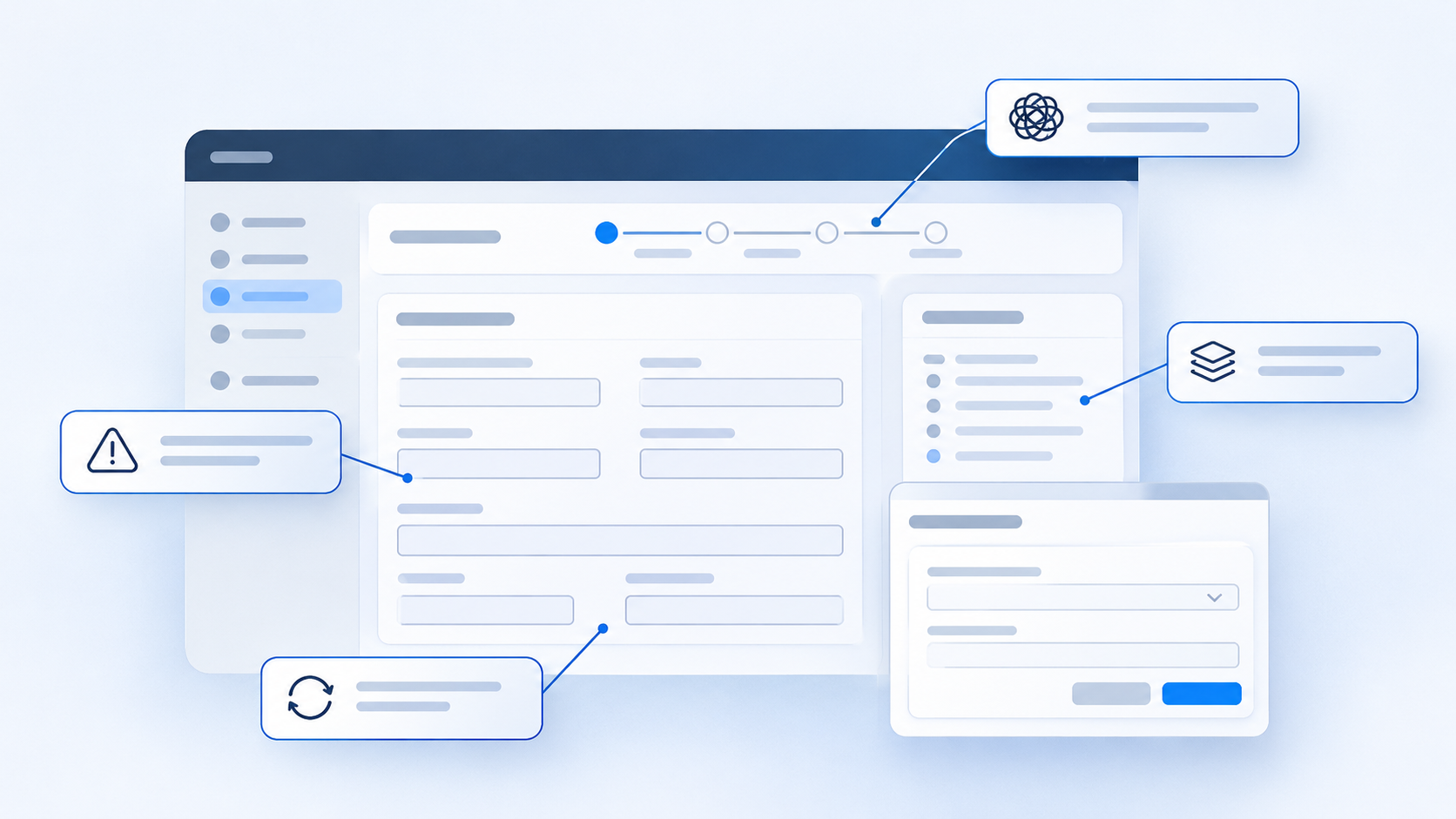
I investigated the existing address change process to understand why agents were encountering difficulties.
Through discussions with customer service agents, I explored how they completed address updates, which parts of the process caused confusion and where errors or duplicated information could occur.
I also reviewed the existing workflows to understand how information was captured and how the different steps related to one another.
This helped identify opportunities to simplify the journey and create a more logical sequence of interactions.
Rethinking the workflow
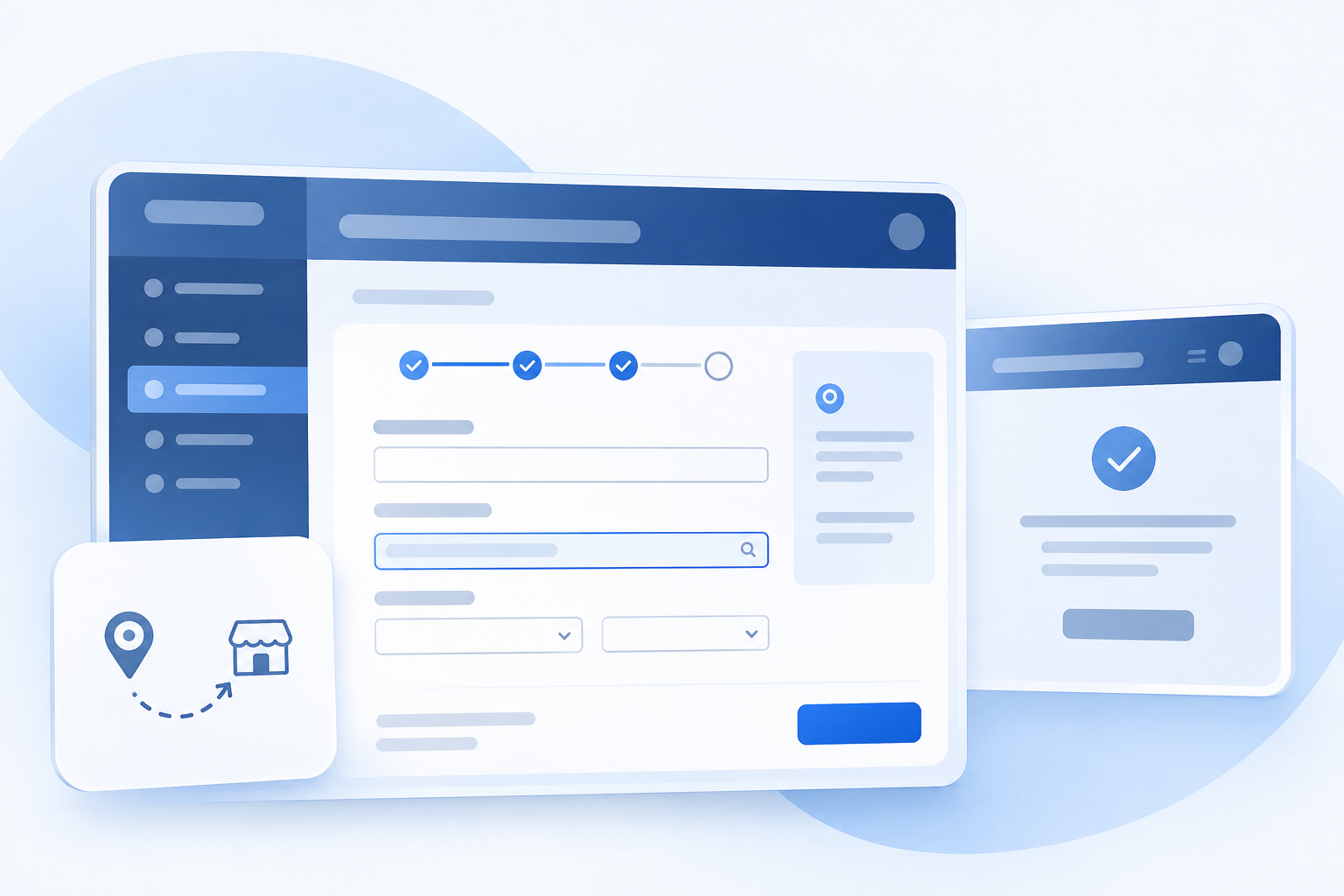
Rather than simply updating individual screens, I approached the problem by reconsidering the overall flow.
Using Miro, I mapped the existing process and explored how tasks could be reorganised to make the experience easier to understand.
The focus was on establishing a clearer progression through the address change process, reducing ambiguity and helping agents understand what information was required at each stage.
I worked with business analysts and stakeholders to ensure the proposed flow accounted for relevant business rules and technical dependencies.
Designing a more intuitive experience
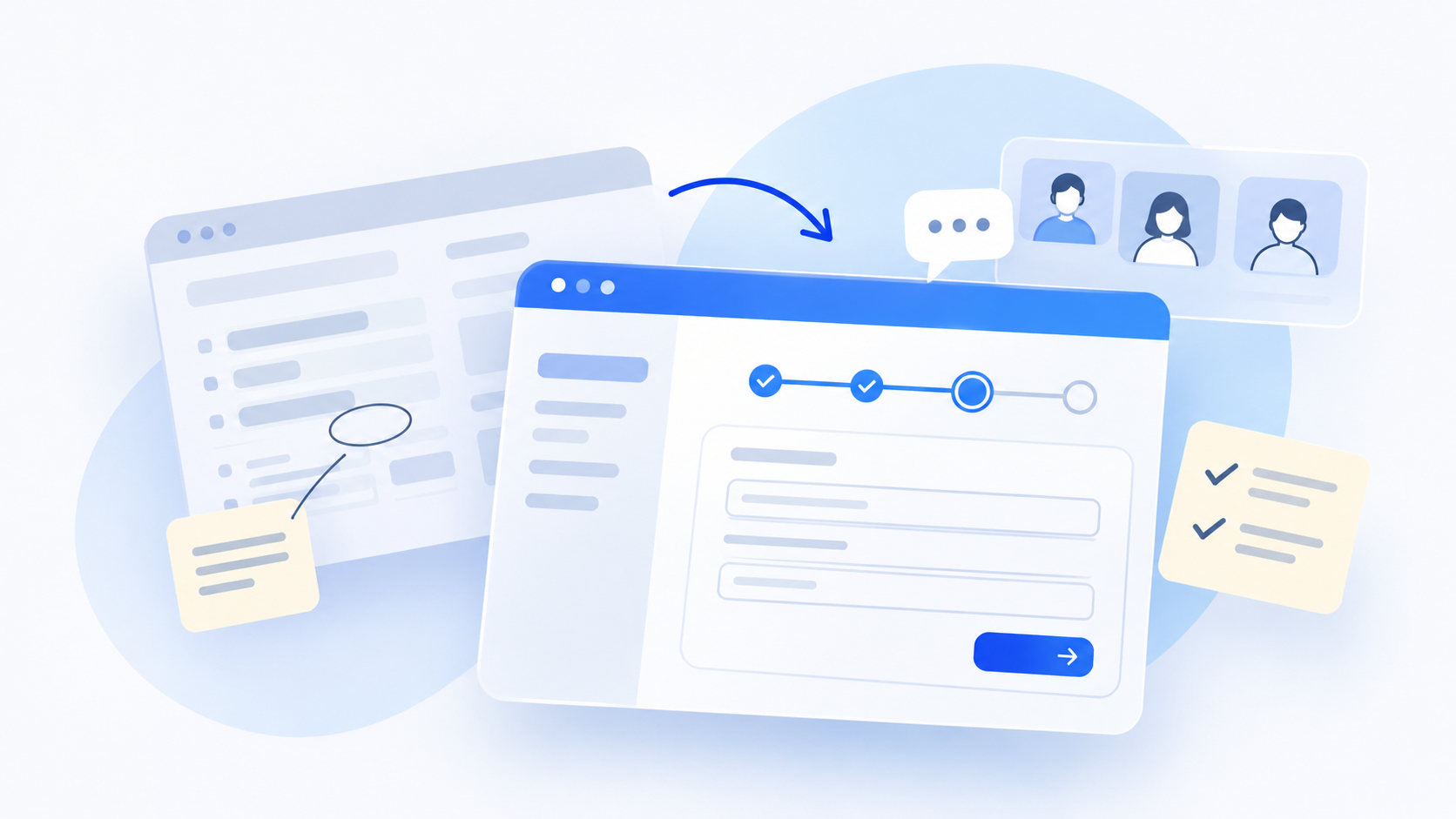
I developed interface designs in Figma, translating the revised workflows into a more structured and user-friendly experience.
Particular attention was given to the order in which information was presented, the clarity of individual steps and the opportunities for preventing errors.
The design approach aimed to make it easier for agents to follow the correct process without relying on unnecessary navigation or interpretation.
I also considered how the interface could better support accurate data entry and reduce the likelihood of duplicate information being created.
Collaboration and refinement

Throughout the project, I worked closely with stakeholders, business analysts and developers to review requirements, discuss design decisions and understand implementation constraints.
This collaboration was important in ensuring that improvements to the user experience remained practical within the existing Salesforce environment.
The proposed design was refined to balance ease of use, operational requirements and technical feasibility.
Outcome

The redesigned workflow provided a clearer and more intuitive approach to managing business customer address changes.
By reconsidering the sequence of tasks, simplifying interactions and addressing known sources of confusion, the design aimed to reduce errors and duplicate records while making the process easier for agents to complete.
The project demonstrates my ability to identify operational pain points, simplify complex workflows and translate user research into practical interface improvements.
Confidentiality note: The visuals presented in this case study are AI-generated illustrations created to represent the design concepts and processes discussed. They are not actual Telstra interfaces or internal documents. These illustrative visuals have been used to protect Telstra's confidential information and intellectual property.